.jpg)
About
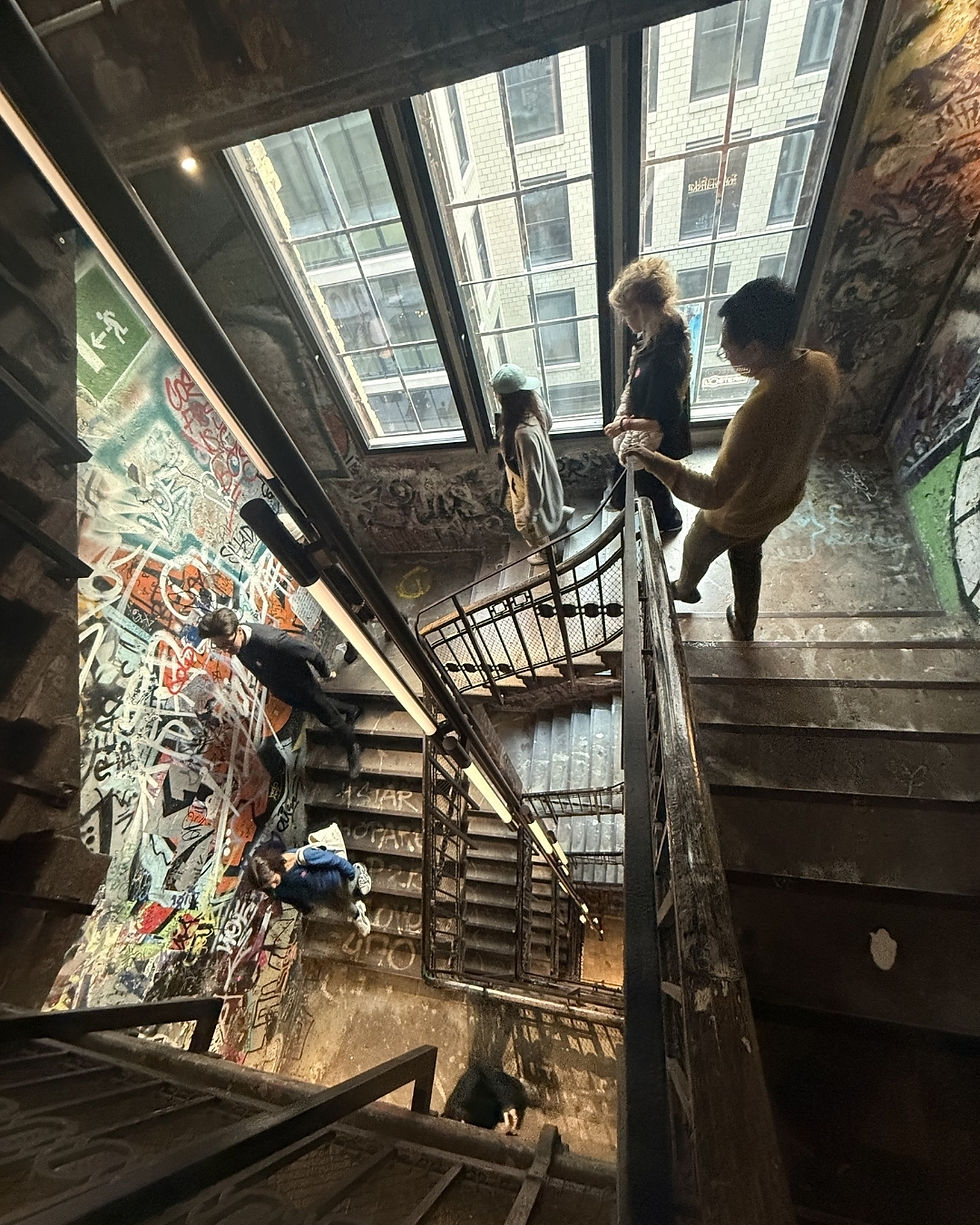
Fotografiska Berlin occupies one of the city's most storied buildings, a site whose layered history of commerce, ideology and countercultural experimentation makes it an unusually resonant home for a contemporary photography museum. Constructed in the early twentieth century as one of Berlin's largest department stores, the building later served, during the Nazi era, as headquarters for the regime's German Labour Front, before standing at the centre of the city's postwar and post-reunification history. From 1990 to 2012, the building became internationally known as Kunsthaus Tacheles, home to an influential artists' collective whose studios, installations and political expression transformed the site into a symbol of Berlin's underground creative scene following the fall of the Wall.
Fotografiska itself was founded in Stockholm in 2010 by Jan and Per Broman, and expanded internationally with locations in Tallinn and, briefly, New York, before German entrepreneur Yoram Roth, who began investing in the organisation in 2017, became its owner in 2020 and led its continued global growth. Fotografiska Berlin opened in September 2023 as the institution's fourth location, alongside a new museum in Shanghai, occupying some 5,500 square metres of the former Tacheles building following a renovation led by Berlin based Studio Aisslinger under founder Werner Aisslinger, who sought to weave together the structure's many historical layers rather than erase them, describing the result as a kind of walk-in collage of the building's successive lives.
The museum's contemporary importance lies in its distinctive institutional model, combining rotating photography and contemporary art exhibitions with an extensive public programme of talks, screenings and live performances, alongside hospitality spaces including a restaurant, bars, a bakery, a concept store and a ballroom, positioning Fotografiska as a dynamic cultural hub rather than a museum in the conventional sense. Its curatorial trajectory brings together established and emerging photographers from around the world, with exhibitions frequently engaging themes of identity, social justice and historical memory, including presentations examining Berlin's own twentieth century history through the photographic record.
As a private, for profit cultural institution, Fotografiska's organisational structure differs from that of publicly funded museums, with its core pillars resting on its exhibition and public programming, its hospitality and events offerings, and its retail operations, all sustained through admissions, membership, dining and venue rental revenue rather than state subsidy. This commercially sustained model has allowed Fotografiska to maintain extended opening hours and a broad, accessible public programme, continuing the site's long history as a place of gathering, exchange and creative production in the heart of Berlin.


